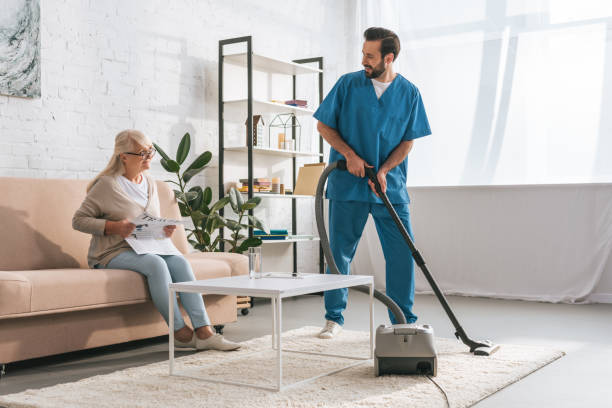
Aged care facilities carry a weight of responsibility that most other workplaces simply don’t have. The people living there are often frail, immunocompromised, or recovering from illness, which means the margin for error on hygiene is razor thin. A cleaning oversight that would be a minor annoyance in an office can turn into a serious health event in a residential aged care home.
The Stakes Are Different Here
Residents in care facilities are more susceptible to infections than the general population, partly due to age and partly due to underlying health conditions. Outbreaks of norovirus, influenza or respiratory illness can spread through a facility in days if surfaces, shared equipment and common areas aren’t managed properly. Families entrust these homes with the wellbeing of people they love, and that trust rests heavily on what happens behind the scenes with cleaning and infection control.
Aged care providers in Australia also operate under the Aged Care Quality Standards, which explicitly require safe, clean environments as part of accreditation. Falling short isn’t only a health risk – it can jeopardise a facility’s standing with regulators and its reputation with the community it serves.
More Than Just Surface Cleaning
Standard cleaning gets a room looking tidy. Infection control in an aged care setting demands a different level of rigour entirely – correct dwell times for disinfectants, colour-coded equipment to prevent cross-contamination between rooms, and strict protocols for handling laundry and waste from residents who may be unwell.
This is where facilities benefit enormously from working with a team trained specifically in aged care environments rather than general commercial cleaning. A dedicated aged care cleaning Sydney provider understands the difference between a routine wipe-down and a proper infection-control clean, and knows when each is required.
Common Blind Spots Facilities Overlook
Handrails, call buttons, light switches and door handles get touched constantly throughout the day, yet they’re frequently missed in a standard cleaning pass because attention naturally goes to floors and visible surfaces. Shared equipment like wheelchairs, walking frames and hoists also needs regular disinfection, since it moves between residents and can easily become a transmission point if neglected.
Bathrooms deserve special mention too. Many residents need assistance with personal care, which means these spaces see heavier use and higher contamination risk than a typical bathroom. A thorough cleaning routine treats them accordingly, rather than applying the same schedule used elsewhere in the building.
Supporting Staff as Much as Residents
It’s easy to focus entirely on resident outcomes and forget that care staff spend long shifts in these environments too. Nurses and support workers are at genuine risk of picking up illnesses from residents and passing them along, particularly during flu season. A well-managed hygiene program protects staff as much as it protects the people they’re caring for, which in turn reduces sick leave and keeps rosters more stable.
There’s a knock-on effect worth mentioning here as well – staff morale tends to be noticeably better in facilities that are visibly well maintained. Nobody wants to come to work in a building that feels neglected, and that goes double for people doing emotionally demanding care work.
Building a Cleaning Program That Meets Accreditation Standards
Facilities preparing for accreditation reviews often scramble at the last minute to tidy up documentation and processes. A better approach is treating hygiene as an ongoing program rather than a box to tick before an inspection. That means documented cleaning schedules, clear responsibility for each area of the building, and regular audits to confirm standards are actually being met day to day, not just on paper.
Outbreak management plans matter here too. When an infection does occur, facilities need a rapid-response cleaning protocol ready to go, rather than figuring it out on the fly while residents and families are anxious.
What to Ask Before Choosing a Provider
Facility managers should look for cleaning partners with demonstrated experience in healthcare or aged care settings specifically, not just general commercial premises. Ask about their infection control training, their protocols for outbreak response, and how they handle staff vetting given they’ll be working around vulnerable people. Police checks, proper induction and consistent staffing (rather than a rotating cast of unfamiliar faces) all matter more in this setting than almost any other.
The Role of Communication With Families
Families visiting a loved one in care often notice hygiene standards even if they don’t say anything directly – a lingering odour, a dusty windowsill, or a bathroom that looks neglected can quietly erode confidence in a facility, even if the actual care being provided is excellent. Being upfront about cleaning protocols, and even sharing them during facility tours or family meetings, helps build trust before a problem ever has the chance to arise.
Some facilities have found it useful to include cleaning and infection control information in their regular family communications, particularly during flu season or if there’s ever a localised outbreak in the community. Transparency here tends to reassure families far more than silence does, even when the news isn’t entirely positive.
Bringing It Together
Hygiene in aged care isn’t a line item to minimise on a budget spreadsheet – it’s central to resident safety, staff wellbeing and regulatory compliance all at once. Facilities that get serious about this, and partner with people who genuinely understand the sector, tend to see fewer infection incidents, smoother accreditation reviews and a community of residents and families who trust the care being provided.