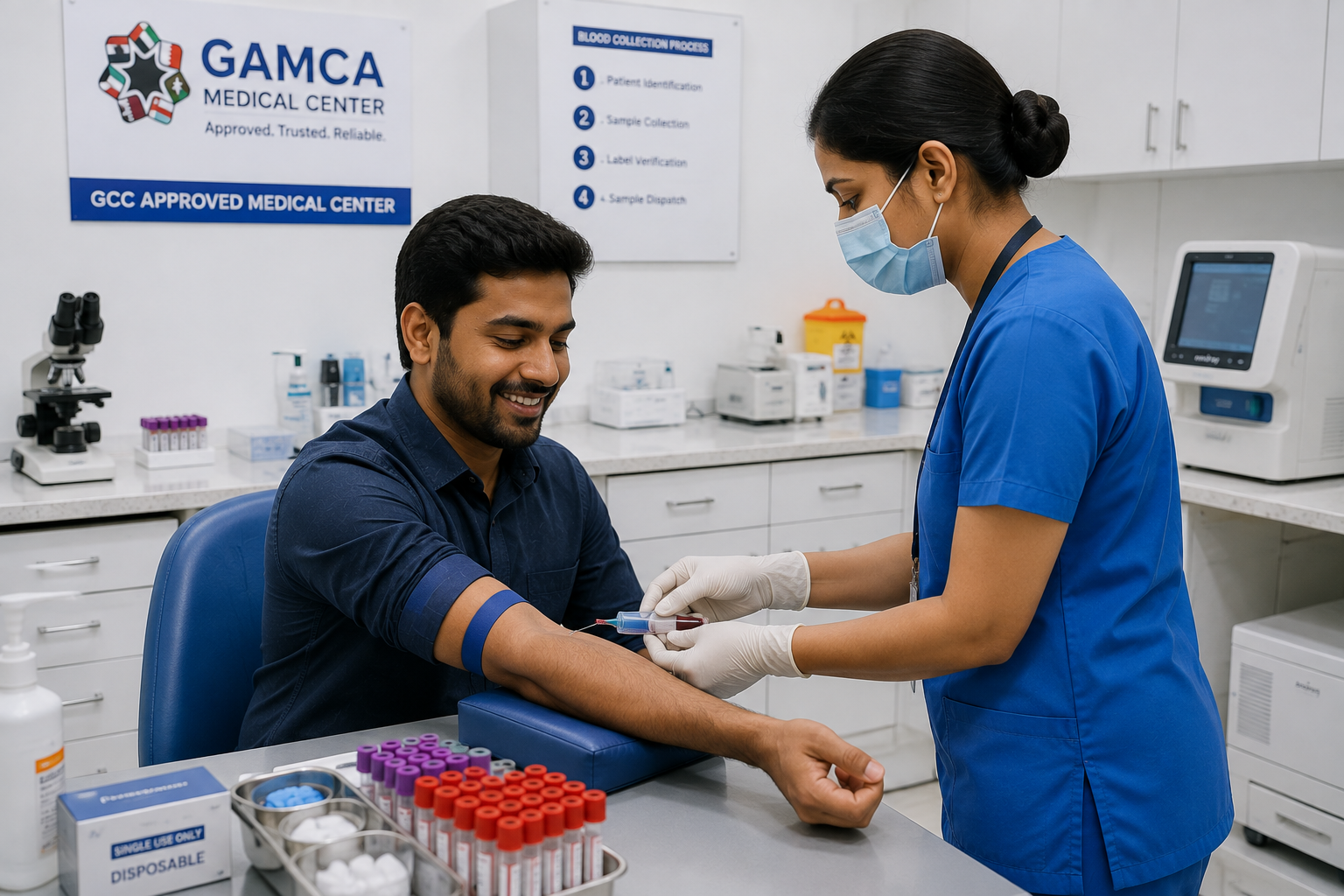
Getting a job offer from a Gulf country is exciting, but there is usually one administrative hurdle standing between the offer letter and your flight: the GAMCA Medical examination. If you have never been through it before, the process can feel a little mysterious, mostly because nobody explains it clearly until you are already sitting in a waiting room. This article covers what the test involves, why it matters, and how to walk in prepared instead of confused.
What the Examination Actually Involves
The exam is a fairly standard combination of a physical check-up and laboratory testing. Expect a chest X-ray to screen for tuberculosis, blood tests covering hepatitis B and C and HIV, a urine test, and a general physical exam that checks things like blood pressure, vision, and overall fitness. For most healthy adults, this is routine and not something to lose sleep over. The centre will usually have you fill out a basic health declaration form as well, so it helps to know your own medical history, including any past conditions or ongoing medication, before you arrive.
Why It Matters to Your Visa Application
Gulf countries require this screening as a condition of issuing a work visa, so the result is not optional paperwork you can skip or delay indefinitely. A clear report gets forwarded electronically and linked to your passport, allowing the destination country to verify your fitness status as part of visa processing. If a result comes back unfit, either due to an active infection or a condition that has not been treated, it can hold up or even derail the visa process, so catching and addressing any health issue early is genuinely in your own interest, not just a bureaucratic checkbox.
Choosing a Centre and Booking Your Slot
Not every clinic is authorised to conduct the GAMCA Medical exam, so it is worth confirming that the centre you are considering is actually on the approved list for your destination country. Booking in advance is generally a good idea since some centres get busy, particularly around peak recruitment seasons. Bring your passport, a few passport photos, and any referral documents your agency has provided. Most centres will walk you through the same sequence: registration, physical exam, lab sample collection, and then a short wait while results are processed.
What Happens After the Test
Results are typically ready within a few days, and they get uploaded to a central system rather than handed to you as a printed certificate you carry around. Your recruitment agency or the visa processing authority accesses this directly using your passport number, so you generally do not need to chase down physical copies yourself. If something in your results needs a second look, the centre or your agent will usually let you know what the next steps are, whether that is a repeat test, additional documentation, or a doctor’s note.
What Influences the Cost
Pricing for the exam varies by centre and by which tests are included for your specific destination country, so it is worth comparing a couple of options rather than assuming every clinic charges the same amount. Generally, the fee covers the physical examination, X-ray, and standard lab work, though some centres bundle in registration or processing charges separately. It is reasonable to ask for a clear breakdown before booking so there are no surprises when you arrive. Keep in mind that choosing the cheapest option available is not always the smartest move if that centre has a reputation for slow turnaround or unclear communication, since delays in your results can end up costing you more in the long run through missed deadlines or rebooked flights. A slightly higher fee at a centre known for efficient service is often worth it for the peace of mind alone.
Common Reasons Results Get Delayed
Delays are not usually caused by anything dramatic, but a handful of ordinary issues tend to come up again and again. Illegible or mismatched passport details entered at registration is one of the most frequent culprits, since even a single incorrect digit can cause the system to flag your file for manual review. Another common cause is an incomplete health declaration form, where an applicant leaves out a past condition or medication that later shows up in the lab work, prompting the centre to ask follow-up questions before finalising the report. Occasionally, a borderline reading on a routine test, such as blood pressure taken right after a stressful journey to the centre, triggers a request for a repeat measurement rather than an automatic pass. None of these situations are cause for panic, but understanding them ahead of time helps explain why your result might take a day or two longer than a friend’s did, even if you both visited the same centre on the same day. Being upfront and accurate on your paperwork from the start is genuinely the single best way to avoid unnecessary back-and-forth.
A Few Tips Before You Go
Try to get a reasonable night’s sleep beforehand and avoid heavy meals right before the blood draw, since that can occasionally affect certain readings. Bring your existing prescriptions or a doctor’s letter if you are on regular medication, so the examining physician has full context rather than guessing. If you want a reliable place to check current centre listings, requirements, and appointment options before you go, GAMCA Medical resources are a useful starting point, and returning to a dependable source again later in the process can save you from relying on outdated information passed around informally. Treat the exam as one manageable step in a longer journey, not the whole journey itself.